
Staff writer
OLD Mutual Zimbabwe is embedding sustainability across its investments, lending, property developments and customer solutions as the financial services group seeks to strengthen the resilience of its business while supporting broader economic development.
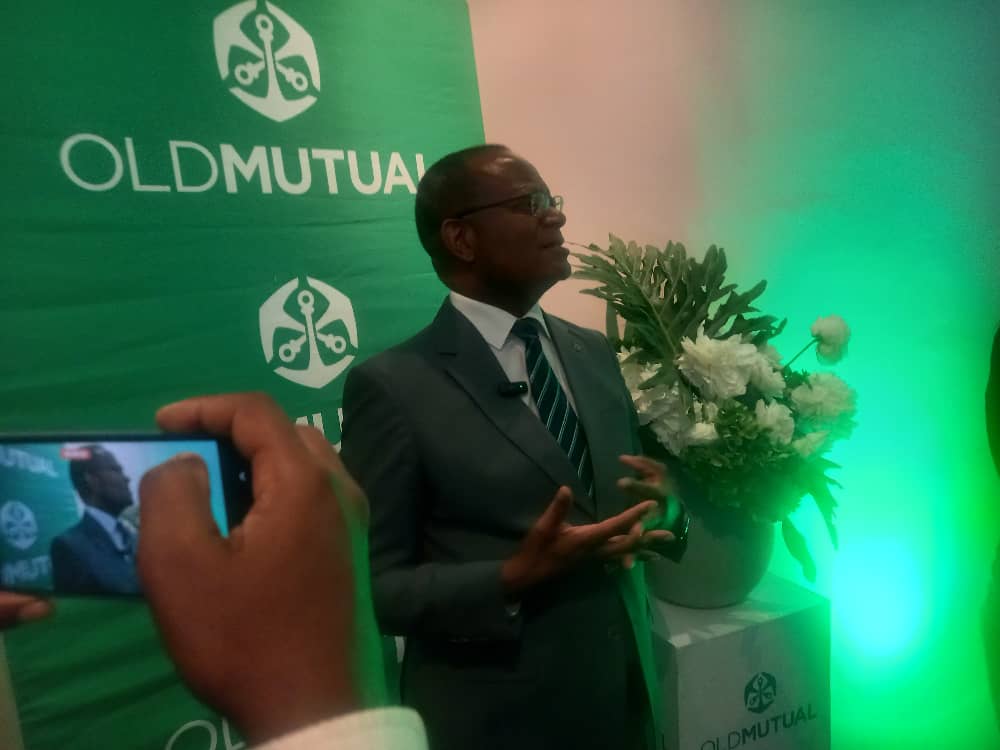
The group’s chief executive, Mr Samuel Matsekete, said sustainability was no longer being treated as a standalone corporate initiative, but as an integral part of how Old Mutual Zimbabwe conducts its business and makes investment decisions.
Speaking in an interview after an analyst briefing on the group’s financial results for the half year ended June 30, 2026, Mr Matsekete said the approach was critical to ensuring that the business remained resilient over the long term.
“Sustainability for us is something that we really would like to continue to uphold, and we believe it’s part of how we will be strategic in ensuring resilience of our business into the future,” he said.
He said sustainability principles were being incorporated into everything from property development to products and services offered to customers, with the group paying particular attention to renewable energy, environmental protection and climate resilience.
“Whatever we do, whether it’s in the property development that we’ve spoken about, or it’s in other products that we extend or deliver to our customers, we are embedding sustainability principles in there,” Mr Matsekete said.
This includes assessing whether renewable energy can be incorporated into new developments, while ensuring that projects do not damage water bodies or undermine natural ecosystems.
Old Mutual’s approach is being implemented through three broad pillars — responsible investment, climate action and climate awareness with the group also linking sustainability to financial inclusion, food security, education and community empowerment.
Under responsible investment, Mr Matsekete said the group continued to assess how its products and services affected customers and communities, while ensuring that projects financed through its various businesses delivered sustainable outcomes.
A key initiative has been the renewable energy fund launched in November 2024, which has so far mobilised US$20 million.
The fund is already deploying capital into projects, with some investments having started generating electricity for beneficiaries.
“One of the projects is the one we did in Bulawayo under this fund,” Mr Matsekete said.
He said the group intended to continue mobilising resources into the fund and scale it further as demand for renewable energy investment grows.
Old Mutual’s sustainability focus also extends to its property portfolio, where developments are increasingly being designed around energy efficiency and climate resilience.
Mr Matsekete cited Eastgate Centre in Harare as an example of how sustainable design can deliver commercial and environmental benefits.
Developed decades ago, Eastgate has gained international recognition for its energy-efficient design, which uses natural ventilation principles to moderate temperatures and reduce reliance on conventional cooling systems.
“For the size of that building, if you look at the energy that is being used there, people always wonder how do you do this and still have a cool environment where temperatures are moderated, and it’s because of the design,” he said.
Old Mutual is seeking to incorporate similar principles into new developments by giving architects and engineers sustainability and climate-resilience parameters that must be considered in project design.
The group is also applying sustainability considerations when deciding which businesses and projects to finance.
Mr Matsekete said promoters seeking funding were increasingly being required to demonstrate that sustainability principles were incorporated into their projects.
“And where we invest in companies, ventures that promoters come to us and look for funding, we are also insisting on sustainability principles being part of how the projects get to be developed,” he said.
The strategy is also being reflected in the group’s lending activities, with food security emerging as one of the areas receiving significant financial support.
Mr Matsekete said 11 percent of the bank and microfinance portfolio had been directed towards initiatives supporting food security.
The group is also continuing to support education and wellness initiatives as part of its broader responsible investment agenda.
Climate action forms the second pillar of the strategy, with Old Mutual working to reduce its reliance on conventional sources of energy across its operations.
Mr Matsekete said renewable energy now accounted for 26 percent of the group’s energy use, up from 22 percent in 2020.
The group has installed renewable energy systems at some of its premises, with two sites already capable of feeding surplus power into the national grid.
“At two of our sites we do actually have net metering, which means in surplus, what we are using there we are also feeding it into the grid,” he said.
The shift towards renewable energy comes as businesses grapple with the need to contain operating costs while improving energy security and reducing exposure to climate-related risks.
Old Mutual is also investing in climate awareness and financial empowerment programmes, which Mr Matsekete said were important in strengthening the resilience of communities and small businesses.
The group’s flagship programmes have reached beneficiaries across the country, with this year’s Value Creation Challenge reaching about 1 800 people across nine of Zimbabwe’s 10 provinces.
Participants received financial literacy and other interventions aimed at improving their understanding of financial solutions and supporting the development of their businesses.
Mr Matsekete said the programmes were increasingly attracting interest beyond Zimbabwe, with beneficiaries from South Africa also participating in some of the group’s online initiatives.
The programmes, he said, helped demonstrate the practical value of sustainability interventions by enabling communities and small businesses to improve their livelihoods.
“We believe these are things that will continue to give us also our licence to operate, which is really how the community is receiving us and supporting our interventions,” he said.
Financial inclusion remains another component of Old Mutual’s sustainability agenda, with the group using its digital platforms and other business channels to bring underserved segments of the population into mainstream financial services.
Mr Matsekete said the group was continuing to develop products through its OMARI platform and other business areas to expand access to financial services.
However, he stressed that sustainability could not simply be about increasing the number of products sold.
The group wanted to ensure that customers received meaningful value from the solutions offered to them, thereby strengthening the long-term sustainability of both the customer relationship and the business.
“Not just so that it can be sold, but so that we deliver value that’s recognized,” he said.
Old Mutual publishes a sustainability report annually detailing its interventions and progress against its sustainability objectives.
Mr Matsekete said the group would continue to assess its performance and identify areas where it could improve.
“We don’t do this as an initiative. We do these things as part of our way of doing business,” he said.
Looking ahead, the chief executive said the group remained confident of sustaining growth during the second half of the year, provided macroeconomic conditions remained stable.
He said growth in the economy was increasingly being anchored by agriculture and mining, while services were also beginning to show stronger activity.
“We think that we will be able to sustain growth, especially if the underpinning conditions in the macroeconomy remain those of stability,” Mr Matsekete said.
For Old Mutual, the sustainability agenda is therefore increasingly intertwined with its broader growth strategy — from how it deploys capital and develops property to how it manages energy, serves customers and supports communities.
The group’s strategy suggests that resilience is being viewed not simply as the ability to withstand economic shocks, but as the capacity to build a business that remains relevant to customers, communities and investors as environmental, economic and social conditions change.