
Staff Writer
HARARE: Unpaid retirement benefits were the single biggest source of complaints in Zimbabwe’s pensions sector in 2025, underscoring persistent administrative failures that continue to erode public trust in retirement savings, according to the Insurance and Pensions Commission’s (IPEC) latest annual report.
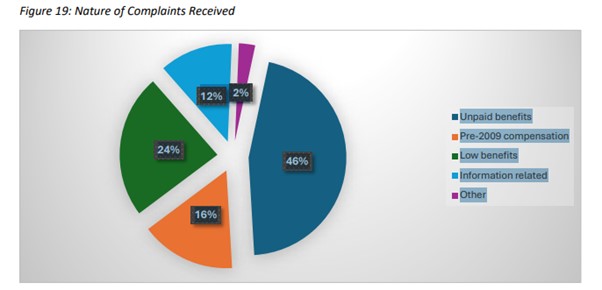
The IPEC Pensions Report for the 12 months ended December 31, 2025 shows that unpaid benefits accounted for 46 percent of all complaints lodged during the year, making it the most common grievance among pension fund members.
Low benefits followed at 24 percent, while disputes over pre-2009 compensation made up 16 percent.
The figures point to a sector still struggling to meet its most basic obligation of paying retirees and beneficiaries on time.
In total, IPEC received 223 complaints in 2025. Of these, 173 were resolved, translating to a resolution rate of 77.5 percent, while 50 cases remained outstanding at year-end.
Although the overall resolution rate suggests some progress in handling complaints, the report said unresolved cases remain concentrated in more difficult and long-running disputes, particularly those linked to compensation for pension losses suffered before Zimbabwe abandoned the local currency in 2009.
“Most of the outstanding complaints relate to the pre-2009 compensation,” IPEC said in the report.
The regulator said the complaints data reflects broader structural weaknesses in pension fund administration, including delays in processing claims, weak communication with members and limited transparency over benefits.
A breakdown of complaints shows that beyond unpaid and low benefits, 12 percent of grievances were related to information issues, while 2 percent fell under other categories.
The report also revealed a sharp contrast between the handling of routine cases and more complicated disputes.
During the year under review, IPEC received 44 complex cases, but only five were resolved successfully, leaving 39 unresolved by year-end.
By contrast, the Commission received 179 non-complex complaints, of which 168 were successfully resolved, leaving just 11 outstanding.
The disparity highlights the difficulty pension funds and administrators continue to face in resolving historical claims, benefit disputes and documentation-related issues that often require lengthy investigations.
Analysts believe that for many pensioners, delayed benefit payments can have severe consequences, particularly in an environment where retirees depend heavily on monthly payouts to cover food, rent, healthcare and other basic living expenses.
“The complaints trend is likely to add pressure on pension funds and administrators to improve service delivery and rebuild confidence in an industry that has long faced scrutiny over governance and member outcomes,” said an industry expert.
In response, IPEC has called on pension funds and administrators to take a more proactive and member-centred approach in dealing with contributors and pensioners.
“The Commission urges the industry to adopt a more proactive, member-centric approach to its engagement with pension fund members to restore and strengthen confidence in the pensions sector,” the report said.
IPEC said pension funds should strengthen communication channels, provide timely and transparent information on benefits and fund performance, and respond to member concerns more effectively.
The regulator also urged the industry to step up member education, improve access to services and ensure benefit payments are processed accurately and without unnecessary delays.
“These measures will contribute significantly to rebuilding trust and reinforcing the pension system’s credibility, integrity and long-term sustainability,” IPEC said.
The expert noted that the latest complaints data is likely to renew calls for reforms in pension administration, particularly around benefit processing and the resolution of legacy disputes, as Zimbabwe seeks to strengthen long-term savings and protect retirees’ financial security.



